 Maldives Compass
Fishing and Island Life
Explore Maldivian fishing culture - the tradition of pole-and-line tuna fishing, the iconic dhoni boats, the deep connection between ocean and identity, and sustainable fishing practices.
The iconic dhoni and the craft of boat-building that has connected islands for centuries
The dhoni is the most recognisable symbol of the Maldives after the islands themselves. This elegant sailing vessel, with its distinctive curved prow and low, sleek profile, has been the lifeline of the archipelago for centuries. Every aspect of Maldivian life has depended on the dhoni: fishing, trade between islands, transport of goods and people, and even warfare. The dhoni is so central to national identity that it appears on the Maldivian national emblem.
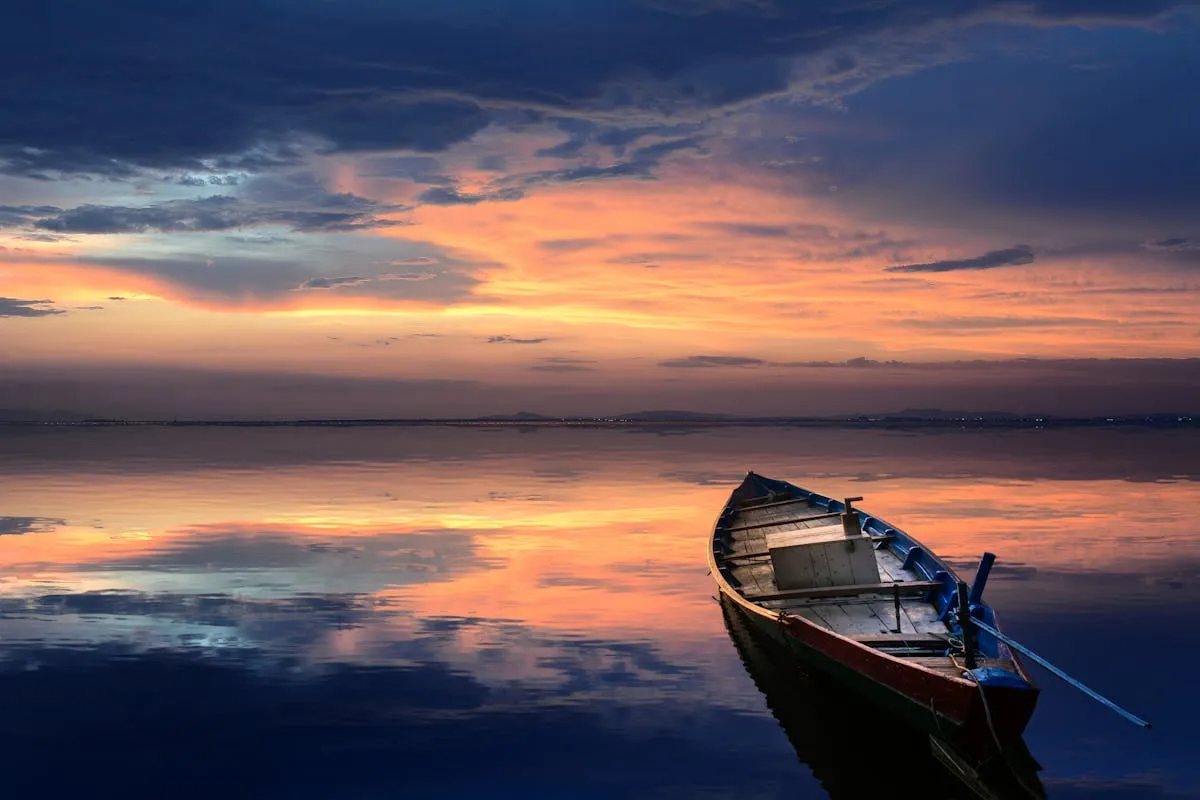
Traditional dhonis were built entirely from coconut palm wood, a material that was abundant across the islands. The coconut palm, known as the "tree of life" in the Maldives, provided not only the timber for hulls and masts but also the coir rope used for rigging and the woven palm-leaf sails. Boat builders, called maavadhi, were among the most respected craftsmen in Maldivian society, and their skills were passed down through families over generations.
The design of the dhoni evolved over centuries to suit the specific conditions of the Maldivian seas. The shallow draft allowed navigation over coral reefs, while the curved prow cut through the swell of the open ocean between atolls. The hull was typically constructed without nails, using coir rope to bind the planks together, a technique that gave the vessel flexibility in rough seas. This construction method bears similarities to ancient boat-building traditions found across the Indian Ocean region.
The Maldivian boat-building tradition produced several distinct types of dhoni, each designed for a specific purpose. The mas dhoni was the fishing vessel, typically 10 to 15 metres long, designed to carry a crew of fishermen and their catch. These boats were optimised for the pole-and-line tuna fishing method that has been the mainstay of the Maldivian fishing industry for centuries. The mas dhoni needed to be fast enough to follow schools of tuna and stable enough for the crew to work the lines.
The bokkuraa was a smaller, simpler vessel used for short trips within an atoll, such as travelling between neighbouring islands or fishing on the reef. Bokkuraas were often paddled rather than sailed and could be built by a single craftsman in a matter of days. Every island household aimed to have access to a bokkuraa, and these small boats were a common sight pulled up on island beaches.
Larger vessels, sometimes called odi, were used for long-distance trade between atolls and for voyages to Sri Lanka and the Indian subcontinent. These ocean-going vessels could carry significant cargo and were essential for the trade networks that sustained the Maldivian economy before modern times. The bateli, another variant, was a cargo dhoni used primarily for transporting goods between Male and the outer atolls.
Each type of dhoni had its own proportions, rigging, and handling characteristics, and skilled sailors could identify them at a distance. The knowledge of these differences was part of the maritime literacy that every Maldivian man was expected to possess.
Building a traditional dhoni was a communal event as much as a technical undertaking. The master builder would select the trees, often walking through the island's coconut groves to find trunks with the right curve and grain. Felling the trees, shaping the keel, and bending the planks were tasks that required the labour of many hands, and neighbours would contribute their time as part of the community spirit that defined island life.
The construction process followed a precise sequence that varied little from island to island. The keel was laid first, carved from a single piece of wood. Ribs were then shaped and attached, followed by the planking. Traditionally, the planks were sewn together with coir rope through drilled holes, and the seams were caulked with a mixture of coconut oil and tree resin. The entire process could take several months for a large fishing dhoni.
Certain islands gained reputations as centres of boat-building excellence. Alifushi in Raa Atoll has been regarded as the premier boat-building island for generations, and its craftsmen were sought after across the archipelago. The skills required for boat-building, including an intuitive understanding of hydrodynamics, material properties, and structural engineering, were not written down but transmitted orally and through apprenticeship.
The launching of a new dhoni was a celebrated event, often accompanied by prayers, feasting, and bodu beru drumming. A newly built dhoni represented a significant investment for its owner and a source of pride for the entire community.
In an archipelago of nearly 1,200 islands spread across 90,000 square kilometres of ocean, boats are not merely vehicles but the fundamental infrastructure of civilisation. Before the advent of air travel and telecommunications, the dhoni was the only means of connecting the far-flung communities of the Maldives. News, goods, and people all moved by boat, and the rhythms of sailing dictated the pace of life.
Fishing, the traditional economic backbone of the Maldives, was entirely dependent on the dhoni. Each morning, crews would set out before dawn, returning in the afternoon with their catch. The tuna that formed the staple of the Maldivian diet was caught from dhonis using the sustainable pole-and-line method, a practice that continues today alongside more modern techniques. The relationship between the fisherman and his dhoni was one of deep familiarity and trust.
Beyond fishing and transport, boats played a role in social and cultural life. Sailing races between islands were a popular form of competition, and the annual Eid celebrations often featured boat races as a highlight. The ability to handle a boat well was a mark of competence and respect, and young men were taught to sail almost as soon as they could walk.
The transition from traditional wooden dhonis to modern fibreglass vessels represents one of the most significant technological shifts in Maldivian maritime history. Beginning in the 1970s and accelerating through the 1980s and 1990s, fibreglass construction gradually replaced coconut wood. The new material was lighter, more durable, required less maintenance, and could be moulded into more efficient hull shapes.
Modern Maldivian boats retain the general silhouette of the traditional dhoni, with the characteristic curved prow, but they are powered by diesel engines rather than sail. Speedboats have transformed inter-island travel, reducing journey times from hours to minutes. The tourism industry has driven the development of specialised vessels, from luxury safari boats that cruise the atolls to fast-transfer launches that shuttle guests between the airport and resort islands.
The shift to modern boats has had mixed effects on the boat-building tradition. While fibreglass dhonis are still built in the Maldives, the craft of wooden boat-building has declined sharply. Fewer young people are learning the traditional skills, and the master builders who still possess them are ageing. There have been efforts to document and preserve these techniques, but the economic reality favours modern materials and methods.
Visitors to the Maldives can still encounter traditional boats in several places. The Male waterfront, particularly the area around the fish market, is a good place to see working dhonis, though most are now motorised fibreglass versions. Some outer islands, particularly in the southern atolls, still have older wooden dhonis in use or preserved as heritage.
The National Museum in Male houses models and artefacts related to the boat-building tradition, and guided tours of boat-building yards on islands like Alifushi offer a firsthand look at the craft. Several resorts also display traditional dhonis as decorative elements or offer sunset cruises aboard restored wooden sailing dhonis, providing guests with a taste of the old maritime tradition.
For those interested in the broader context of Maldivian craftsmanship, a visit to a boat-building island offers insight not only into the technical skill involved but also into the community dynamics and cultural values that sustain traditional crafts in a rapidly modernising nation. The dhoni remains a powerful symbol of Maldivian identity, even as the vessels themselves evolve to meet the demands of the 21st century.