 Maldives Compass
Snorkeling in the Maldives
Everything you need to know about snorkeling in the Maldives, including the best house reefs, marine life you will encounter, gear tips, and top snorkeling spots across the atolls.
Descend into a world of current-swept channels, coral-encrusted thilas, and close encounters with manta rays, sharks, and whale sharks at some of the planet's finest dive sites.
The Maldives consistently ranks among the top dive destinations in the world, and for good reason. The archipelago's 26 atolls create a vast network of channels, reef walls, and submerged pinnacles that funnel nutrient-rich currents through the system, attracting an impressive concentration of marine life. Visibility often exceeds 30 metres, water temperatures sit comfortably between 27 and 30 degrees Celsius, and the diversity ranges from tiny nudibranchs on the reef to whale sharks cruising through open water.
Maldives has sites that will leave a lasting impression.
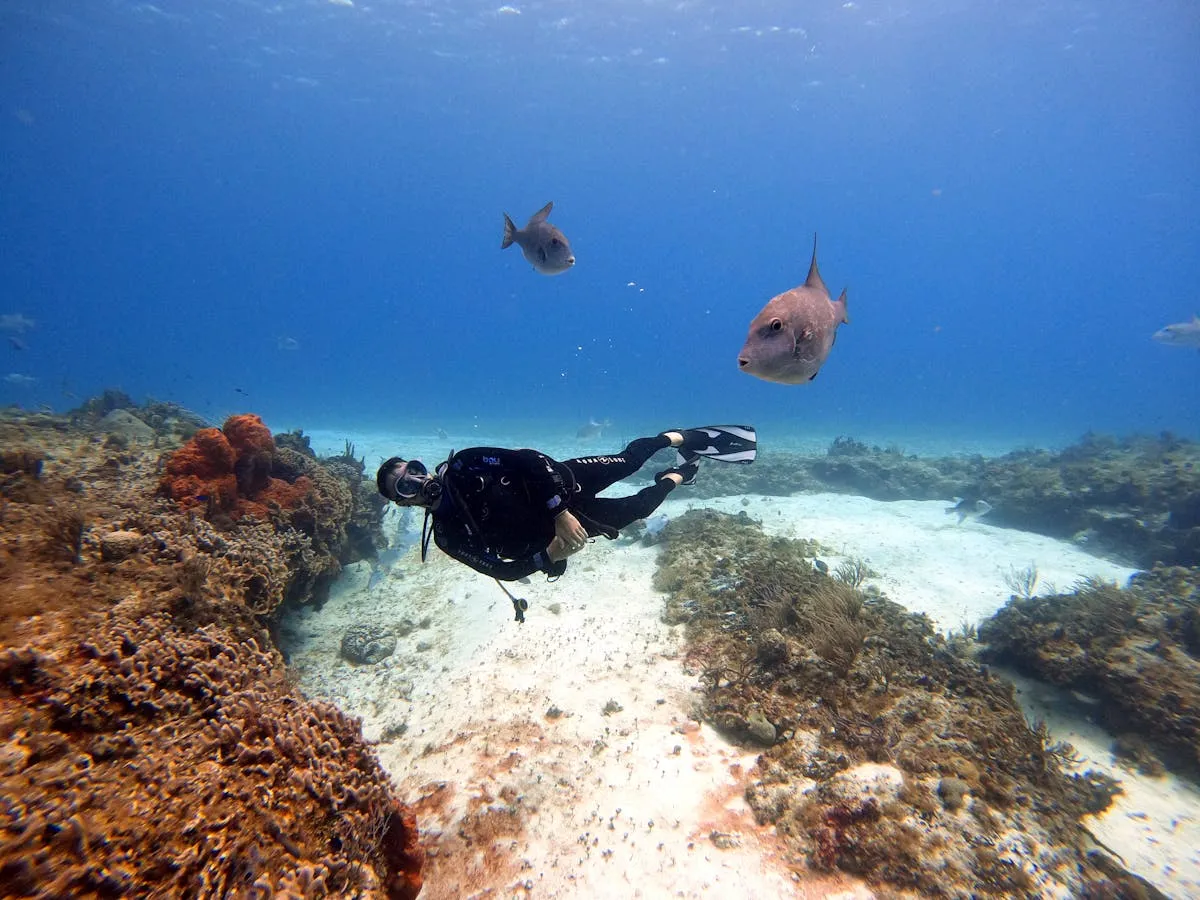
The channels that cut through the atoll rims are the signature dive experience of the Maldives. Tidal currents flow through these gaps, creating nutrient highways that attract grey reef sharks, eagle rays, large schools of trevally, and sometimes hammerhead sharks. Divers typically descend to the channel corner, tuck behind a reef block, and watch the show as pelagic species parade past in the current. Channel dives range from moderate to advanced depending on current strength.
Submerged pinnacles known as thilas rise from the atoll floor to within 5 to 15 metres of the surface. Their walls are covered in soft corals, sea fans, and sponges, and the overhangs shelter nurse sharks, moray eels, and lobsters. Thilas are often circled slowly during a dive, with each side revealing different conditions and different species. Some of the most famous dive sites in the Maldives, including Fish Head (Mushimasmingili Thila) and HP Reef, are thilas.
The outer edges of many reefs plunge steeply into deep blue water. These walls are painted with colourful soft corals and are ideal for drift dives. The deep blue beyond the wall is where you might spot passing manta rays, dolphins, or even a whale shark.
Not every dive needs to be an adrenaline-fuelled drift. Sheltered lagoon sites and shallow reef tops offer wonderful opportunities for macro photography and relaxed exploration of coral gardens. These sites are also ideal for newly certified divers and discover scuba experiences.
You do not need to arrive certified. Almost every resort and many local island guesthouses have affiliated PADI or SSI dive centres that offer courses from beginner to instructor level.
Diving is excellent year-round in the Maldives, but conditions vary by season.
Currents are a constant feature of Maldivian diving. Most dive centres assess conditions on the day and choose sites accordingly. Always follow your dive guide's briefing and carry a surface marker buoy (SMB).
A typical day of diving in the Maldives begins with a boat ride to the dive site aboard a dhoni, the traditional Maldivian wooden boat. Your dive guide will brief you on the site, the expected current, the marine life to look for, and any safety procedures. Most dive trips include two tank dives with a surface interval spent relaxing on the boat or snorkeling.
After the dive, the boat returns you to your island. Many divers find that two dives in the morning, followed by an afternoon on the house reef snorkeling, makes for a perfect day.