 Maldives Compass
Tropical Fish in the Maldives
Meet the colourful tropical fish of the Maldives, from butterflyfish and angelfish to parrotfish, clownfish, and groupers. A guide for snorkellers and divers.
The living foundation of the Maldives, coral reefs support an astonishing diversity of marine life and shape the very islands themselves.
The entire Maldivian archipelago exists because of coral. Every island, every atoll, and every sandbank is built on a foundation of reef limestone deposited over millions of years. Today, living coral reefs continue to protect the islands from wave erosion, provide habitat for thousands of marine species, and support the livelihoods of Maldivian communities through fishing and tourism.
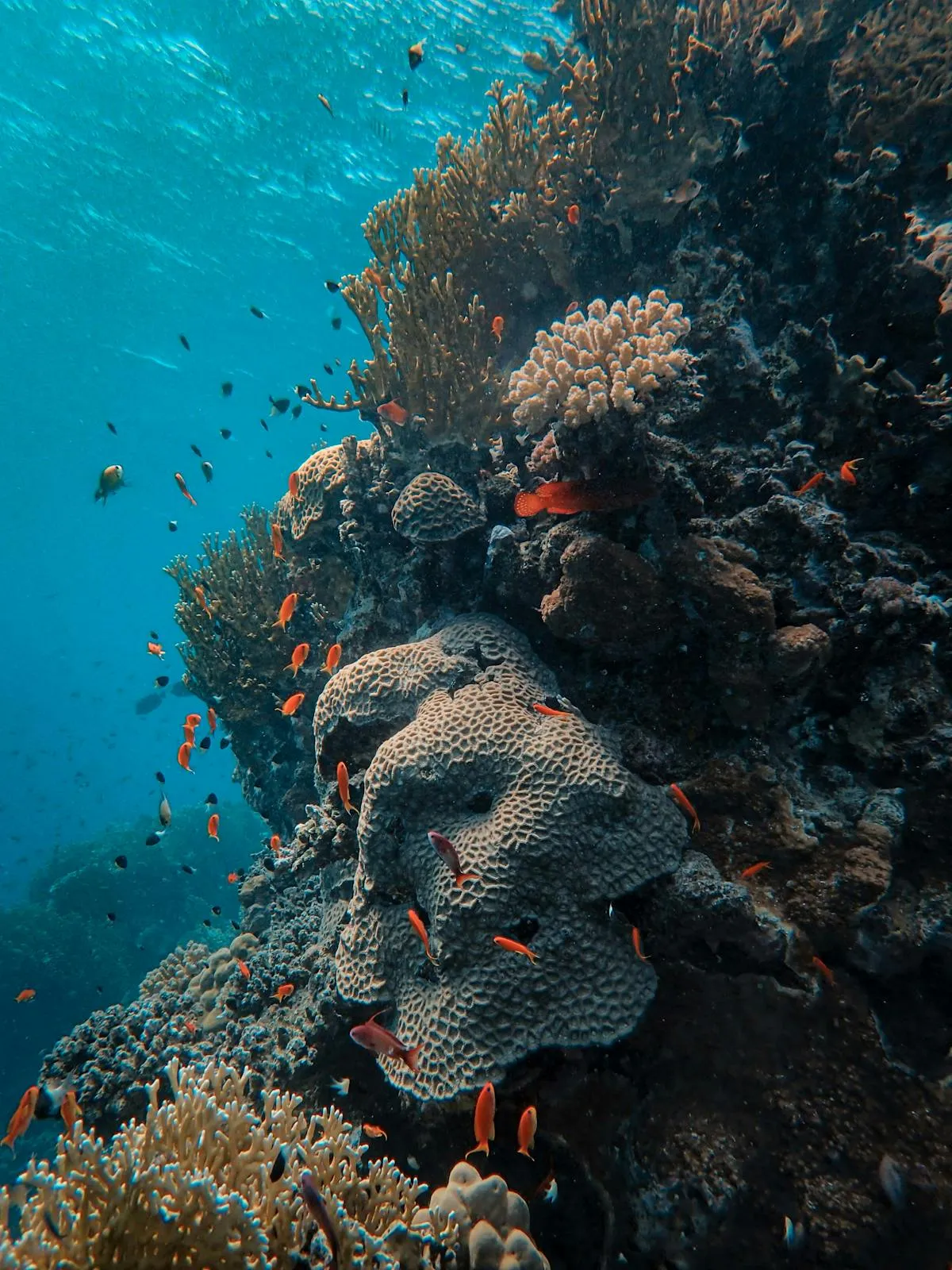
The Maldives is home to roughly 250 species of hard coral and 30 species of soft coral, making it one of the most coral-rich areas in the Indian Ocean. For visitors, the reefs offer some of the most spectacular snorkelling and diving experiences anywhere in the world.
Understanding the different reef structures helps you know what to expect when you enter the water.
Most resort and inhabited islands are surrounded by a house reef, a fringing reef that drops off from the shallow lagoon into deeper water. House reefs are easily accessible from shore and are often the best place for casual snorkelling. You can expect to see tropical fish, sea turtles, and small reef sharks on a good house reef.
Each atoll is encircled by a barrier-like rim reef that separates the deep ocean from the inner lagoon. These outer reefs face strong currents and tend to support robust, wave-resistant coral species such as massive Porites boulders and encrusting Montipora.
Thilas are submerged reef pinnacles that rise from the atoll floor but do not break the surface. Giris are similar but come closer to or just reach the waterline. Both are magnets for marine life and are popular dive sites. Strong currents channel nutrients across these formations, attracting manta rays, sharks, and large schools of fish.
The breaks in the atoll rim, known locally as kandu, allow ocean water to flow in and out of the atoll with the tides. The walls of these channels are draped in soft corals, sea fans, and sponges, and the currents draw pelagic species including grey reef sharks and eagle rays. Channel dives are among the most thrilling experiences in the Maldives.
While a full catalogue would fill a book, here are some of the corals you are most likely to notice.
Coral bleaching occurs when sea temperatures rise above the normal range for an extended period. Stressed corals expel the symbiotic algae (zooxanthellae) that give them colour and provide most of their energy. Without these algae, the coral turns white and, if conditions do not improve, eventually dies.
The Maldives has experienced several major bleaching events. The 1998 El Nino caused catastrophic damage, killing an estimated 90 percent of shallow-water corals in some atolls. Subsequent events in 2016 and 2020 caused further harm. Recovery is possible - many reefs have bounced back impressively - but repeated bleaching shortens recovery windows and weakens reef resilience.
The Maldives has taken meaningful steps to protect its reefs. Highlights include:
As a visitor, you can help by choosing reef-safe sunscreen, never touching or standing on coral, maintaining good buoyancy while diving, and supporting resorts and operators that invest in conservation. Learn more in our About the Maldives section.
While conditions vary from year to year, some areas are consistently rewarding for coral lovers: