 Maldives Compass
Coral Reefs of the Maldives
Discover the coral reefs of the Maldives, including reef types, coral species, the impact of bleaching events, and conservation efforts to protect these vital ecosystems.
Ancient mariners of the reef, sea turtles are one of the most beloved sights in the Maldives, spotted gliding over coral gardens, resting under overhangs, and nesting on quiet beaches.
Five species of sea turtle have been recorded in Maldivian waters, but two are by far the most commonly encountered: the green turtle and the hawksbill turtle. Both species are found throughout the archipelago, and sightings are a near-daily occurrence for anyone spending time in the water. Whether you are snorkelling on a house reef or diving a deep thila, the chances of meeting a turtle are excellent.
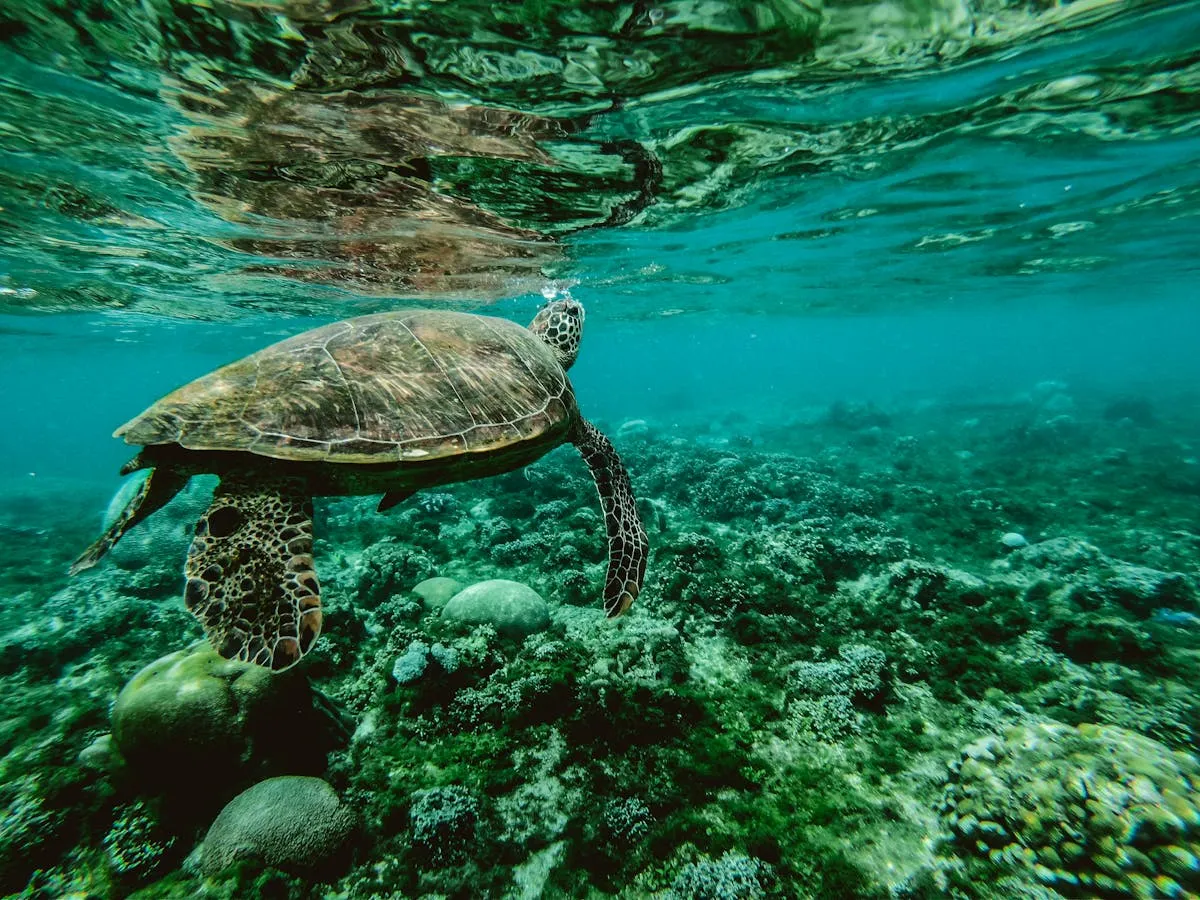
The green turtle (Chelonia mydas) is the larger of the two common species, with adults reaching up to 1.5 metres in shell length and weighing as much as 200 kilograms. Despite their name, green turtles are not always green on the outside - the name refers to the colour of their body fat, a result of their herbivorous diet of seagrass and algae.
In the Maldives, green turtles are frequently seen grazing on seagrass beds in shallow lagoons or resting on sandy patches near the reef. They are generally calm around snorkellers and divers, often continuing to feed unconcerned as you float nearby. Juvenile green turtles are more commonly found on the reef itself, where they eat a mixed diet of algae and small invertebrates before transitioning to seagrass as they mature.
The hawksbill turtle (Eretmochelys imbricata) is smaller than the green turtle, typically reaching around 80 centimetres in shell length, and is instantly recognisable by its narrow, pointed beak and beautifully patterned shell with overlapping scutes. Hawksbills are the reef specialists of the turtle world, using their sharp beaks to extract sponges, soft corals, and other invertebrates from crevices in the coral reef.
Hawksbills are the species you are most likely to encounter while snorkelling or diving on a house reef. They are commonly seen moving methodically along the reef edge, pausing to feed, and occasionally surfacing for a breath of air. They tend to be slightly more skittish than green turtles but will tolerate a respectful observer who keeps a calm distance.
Three additional species are occasionally recorded in the Maldives:
Both green and hawksbill turtles nest on beaches throughout the Maldives, though nesting is more common on uninhabited islands with minimal light pollution and disturbance. Nesting occurs year-round, with some seasonal peaks.
Green turtles tend to nest more frequently between July and November, while hawksbills show a broader nesting period. A female turtle crawls ashore at night, digs a nest in the sand with her rear flippers, lays around 100 to 150 eggs, covers the nest, and returns to the sea. The eggs incubate for approximately 55 to 65 days before the hatchlings emerge, usually at night, and make their way to the ocean.
Several resorts and conservation organisations in the Maldives monitor nesting beaches, protect nests from disturbance, and track hatchling success rates. If you are staying on an island with an active nesting programme, you may have the opportunity to witness a nesting event or a hatchling release - a genuinely experience.
Sea turtles are widespread across the Maldives, but some locations are particularly reliable:
Turtles are generally approachable, but a few guidelines will help ensure a positive experience:
All sea turtles are protected by Maldivian law. It is illegal to capture, harm, or trade in turtles or their eggs. Despite this protection, turtles face ongoing threats from habitat loss, entanglement in fishing gear, plastic pollution, and climate change, which affects sand temperatures and therefore hatchling sex ratios.
Many resorts operate turtle conservation programmes that include nest monitoring, injured turtle rehabilitation, and guest education. The Olive Ridley Project runs a turtle rescue centre in the Maldives, treating turtles entangled in ghost nets - abandoned fishing nets that drift through the ocean. Visitors can often visit these centres and learn about the work first-hand.
You can help turtles during your visit by reducing plastic use, disposing of rubbish properly, choosing reef-safe sunscreen, and supporting operators and resorts that invest in conservation. Learn more about marine life in our Nature section and explore activities in our Things to Do guide.