 Maldives Compass
The Iconic Twin Otter Seaplanes
The de Havilland Canada DHC-6 Twin Otter is the aircraft most people picture when they think of the Maldives. These sturdy, twin-propeller planes fitted with floats have become as much a symbol of the country as overwater villas and white sand beaches. Painted in distinctive red and white livery, they sit bobbing gently on the water at Velana International Airport, ready to whisk travellers away to distant atolls.
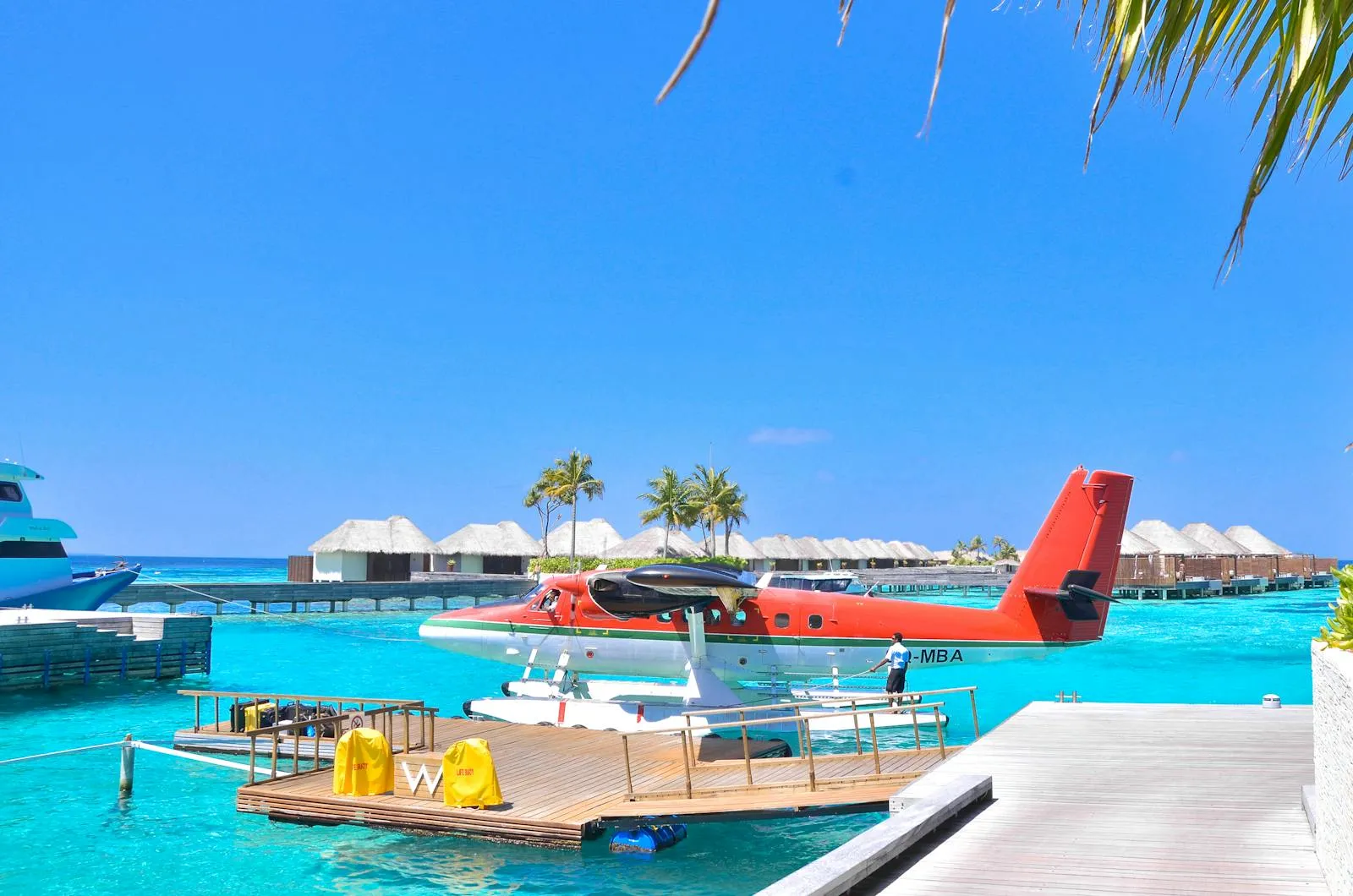
The Twin Otter is perfectly suited to the Maldives. It can land on calm lagoon waters, carry around 15 passengers, and reach islands that are simply too far for a speedboat transfer. The cabin is compact and unpressurised, with large windows that give every passenger view. There is something wonderfully old-school and charming about flying in one of these aircraft, and most visitors count the seaplane ride as one of the top highlights of their entire holiday.
How Seaplane Transfers Work
If your resort is located more than about 30 to 40 minutes by speedboat from the airport, chances are you will arrive by seaplane. The two main operators are Trans Maldivian Airways, which runs the largest seaplane fleet in the world, and Manta Air, which also operates domestic flights. Your resort will arrange the transfer for you, and the cost is usually quoted separately from your room rate.
On arrival at Velana International Airport in Malé, you will be met by your resort's representative and guided to the seaplane terminal. There is a lounge area where you wait for your flight to be called. Seaplane schedules are somewhat flexible and depend on weather, passenger loads, and routing between multiple islands, so you may wait anywhere from 30 minutes to a couple of hours. Bring a book or enjoy the lounge, and keep your camera ready. For more details on getting around the Maldives, check out our practical guide.
Spectacular Aerial Views
The views from a seaplane window are genuinely impressive. As you climb away from the airport, the deep blue of the open ocean gives way to the pale turquoise of shallow lagoons ringed by coral reef. Atolls appear as delicate necklaces of islands strung around enormous lagoons, and you begin to appreciate just how spread out and remote the Maldives really is.
Sandbanks glow white against the blue, tiny uninhabited islands are covered in dense green vegetation, and resort islands appear with their neat rows of overwater bungalows stretching into the lagoon. On a clear day, the visibility is impressive, and you can see the ocean floor through the crystal-clear water from hundreds of metres up. Many visitors say the seaplane flight is when they truly fell in love with the Maldives.
Photography Tips for Seaplane Flights
Getting great photos from a seaplane takes a little preparation. Try to get a window seat on the side that will face the sun for the best light, though honestly, both sides deliver impressive views. The windows can have slight scratches or condensation, so press your lens close to the glass to minimise reflections and glare. A polarising filter can help cut through haze, but you may find it unnecessary if conditions are clear.
Use a fast shutter speed to counteract the vibration of the aircraft, and shoot in burst mode to increase your chances of getting a sharp image. Wide-angle lenses capture the sweeping atoll panoramas beautifully, while a mid-range zoom lets you pick out individual islands and reefs. Video works wonderfully too, especially during takeoff and landing when the spray kicks up around the floats. For more on capturing the Maldives at its best, see our guide to the best photo spots.
Baggage Limits and Practical Details
Seaplanes have strict baggage limits due to the small size of the aircraft. The standard allowance is usually 25 kilograms of checked baggage and 5 kilograms of hand luggage per person, though this can vary by operator. Bags need to be soft-sided rather than hard shell, as they are loaded into small cargo compartments. If you are arriving on an international flight with heavier luggage, your resort can usually arrange temporary storage at the airport.
One important detail is that seaplanes only operate during daylight hours, roughly from 6 in the morning to about 4 in the afternoon. This is because the pilots need visual references to land safely on the water. If your international flight arrives late in the evening, you will need to spend a night in Malé or at an airport hotel and take the seaplane the following morning. Your resort will help coordinate this if needed. Our guide on how to get to the Maldives covers flight timing in more detail.
Scenic Flights vs Transfers
While most seaplane flights in the Maldives are resort transfers, some operators also offer dedicated scenic flights for those who want the aerial experience without necessarily heading to a distant resort. These scenic tours typically last around 30 to 60 minutes and loop over some of the most photogenic atolls and reef formations.
Scenic flights are especially popular with photographers and anyone staying on a local island or a resort that is reached by speedboat. They give you all the visual magic of the seaplane experience as a standalone activity. Some tours include a landing at a sandbank or remote island for a brief stop, adding an extra element of adventure to the flight.
Cost Expectations
Seaplane transfers are not cheap, and it is worth budgeting for them when planning your trip. A return transfer typically costs between 400 and 700 US dollars per person, depending on the distance to your resort. Children usually receive a discounted rate, and infants sometimes fly free. These prices may feel steep, but the experience is genuinely unusual and most visitors consider it money well spent.
Scenic flights are usually priced separately and tend to cost around 200 to 400 US dollars per person depending on the duration and route. Some luxury resorts include the seaplane transfer in their room packages, so it is always worth checking what is included when you book your stay.
What the Experience Is Like
From the moment you board, the experience is unlike any commercial flight you have taken. The pilot sits just a few feet in front of you with no cockpit door, and you can watch them work the controls as you taxi across the lagoon. The takeoff run is thrilling as the floats bounce across the surface before you lift into the air, the spray fanning out behind you.
In the air, the engine hum is loud enough that conversation is difficult, but that is fine because everyone is glued to their windows anyway. The flight is typically at a low altitude of around 300 to 500 metres, which is the perfect height for seeing detail on the islands and reefs below. Landing is equally memorable as the pilot circles the destination island, descends toward the lagoon, and touches down on the glassy water with a satisfying splash. It is an experience that stays with you long after you leave the Maldives.