 Maldives Compass
Island Communities
Social structures and community life.
What daily life looks like when your entire world is a coral island you can walk across in fifteen minutes.
Most inhabited islands in the Maldives are remarkably small. A typical island might measure 500 metres long and 200 metres wide, with a population ranging from a few hundred to a few thousand people. The largest inhabited islands, such as Male and Hulhumale, are exceptional - the vast majority of the roughly 200 inhabited islands are compact communities where everyone knows everyone, every building is a short walk from the harbour, and the ocean is always visible.
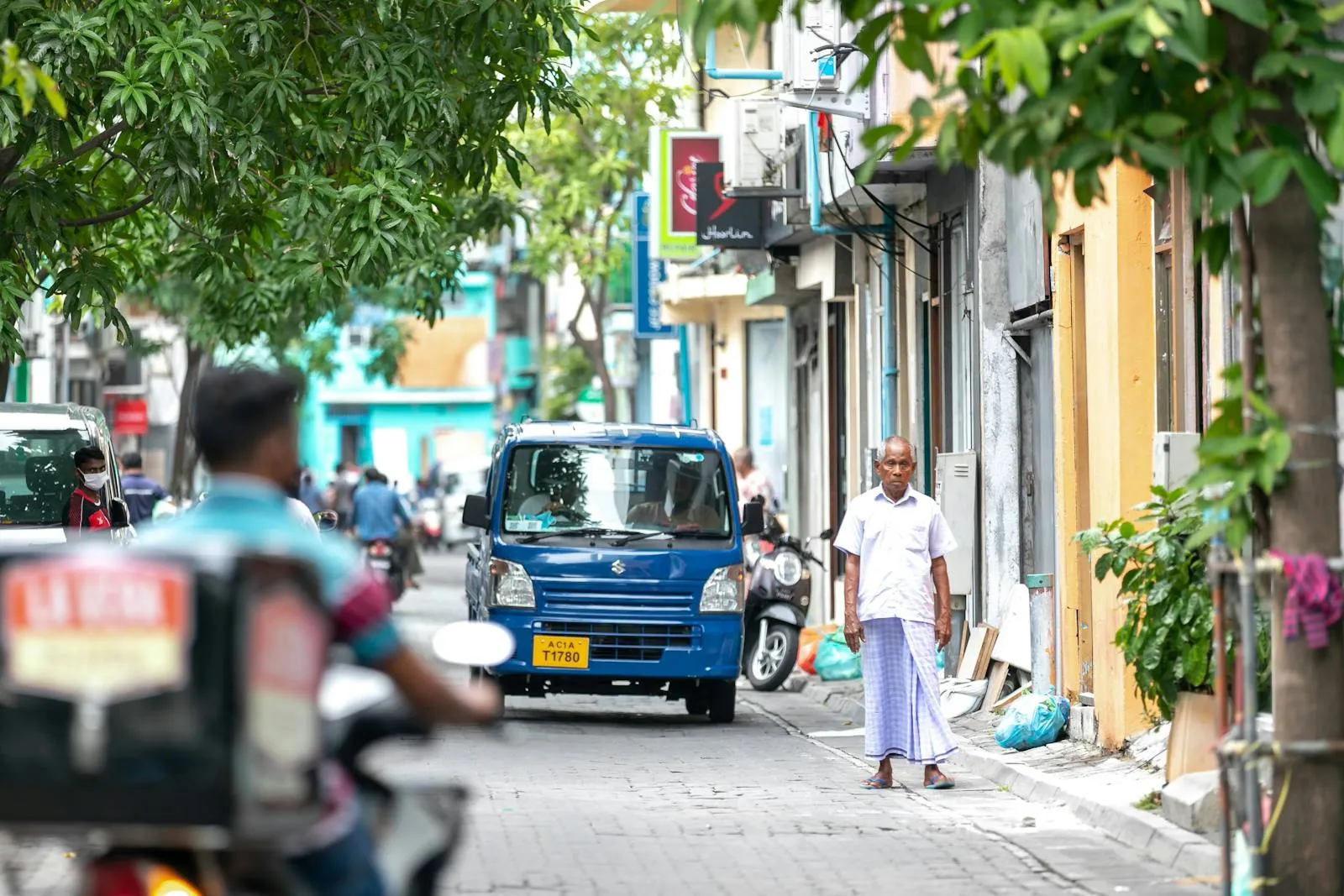
This scale creates a way of life that is fundamentally different from anything found on a continent. Space is precious and finite. The sea is not a backdrop but the defining feature of existence - the source of food, income, transport, and recreation. Community bonds are unusually strong because isolation and proximity demand cooperation.
Life on a small Maldivian island follows rhythms shaped by the ocean, the weather, and Islamic prayer times. A typical day unfolds something like this:
Small island communities are close-knit by nature and by necessity. On an island where everyone knows each other, social relationships are deeply intertwined. Neighbours help with childcare, share food, and assist with building and maintenance. Weddings, festivals, and religious observances are communal events that involve the entire island.
The joali - a traditional swinging seat typically placed in the yard or along the street - is the centre of social life. Families gather on their joali in the late afternoon and evening, chatting with passing neighbours, drinking tea, and watching the world go by. For visitors staying on local islands, these informal interactions offer a genuine window into Maldivian culture.
Island governance is handled by elected island councils, which manage local services, development projects, and community affairs. The council office, mosque, school, and health centre are typically the main public institutions, all within walking distance of every home.
With limited land, Maldivians have adapted their built environment to make the most of every square metre. Homes are typically compact, with small yards enclosed by coral stone or concrete block walls. Streets are narrow - most are just wide enough for pedestrians and bicycles, with no room for cars on most islands. Multi-storey construction has increased in recent decades as populations have grown, with many families building upward rather than outward.
Public spaces serve multiple purposes. The football pitch doubles as a gathering ground for festivals. The harbour area is simultaneously a working port, a social hub, and a marketplace. Even the beach, though primarily a work zone for fishing and boat maintenance, serves as a playground, a laundry area, and a place for evening socialising.
For all its charm, small island living comes with real challenges. Access to healthcare is limited - most islands have only a basic health centre, and serious medical cases require evacuation to Male by speedboat or seaplane. Education beyond primary school often requires children to leave their home island, either commuting daily or boarding on a larger island.
Employment opportunities are concentrated in Male and the tourism sector, leading to significant migration from outer islands to the capital. Many smaller islands have ageing populations as young people leave for work and education. This demographic shift is one of the most significant social challenges facing the Maldives today.
Environmental vulnerability is ever-present. Rising sea levels, beach erosion, and storm damage are constant concerns for communities living just one to two metres above the ocean. Freshwater contamination from storm surges can affect the underground lens that islands depend on. Despite these challenges, Maldivians maintain a deep attachment to their home islands, and many who leave for Male or abroad retain strong ties to their island of origin.
Travellers who stay on local islands get a taste of this island life. The slow pace, the friendly greetings, the sound of the call to prayer, the fishermen mending nets by the harbour - these are the authentic textures of daily life in the Maldives. It is a world away from the resort experience, and for many visitors, it is the highlight of their trip. See our local etiquette guide for advice on respectful engagement with island communities.