 Maldives Compass
What Is Night Snorkeling?
Night snorkeling is exactly what it sounds like: exploring shallow reefs and lagoons after dark, equipped with a mask, snorkel, fins, and an underwater torch. In the Maldives, this activity has become one of the most sought-after experiences because the tropical waters come alive in entirely different ways once the sun sets. Creatures that hide during daylight hours emerge to hunt and feed, while the water itself can glow with natural bioluminescence. Night snorkeling sessions are typically guided, lasting between 45 minutes and an hour, and take place in sheltered areas close to shore where conditions are calm and safe.
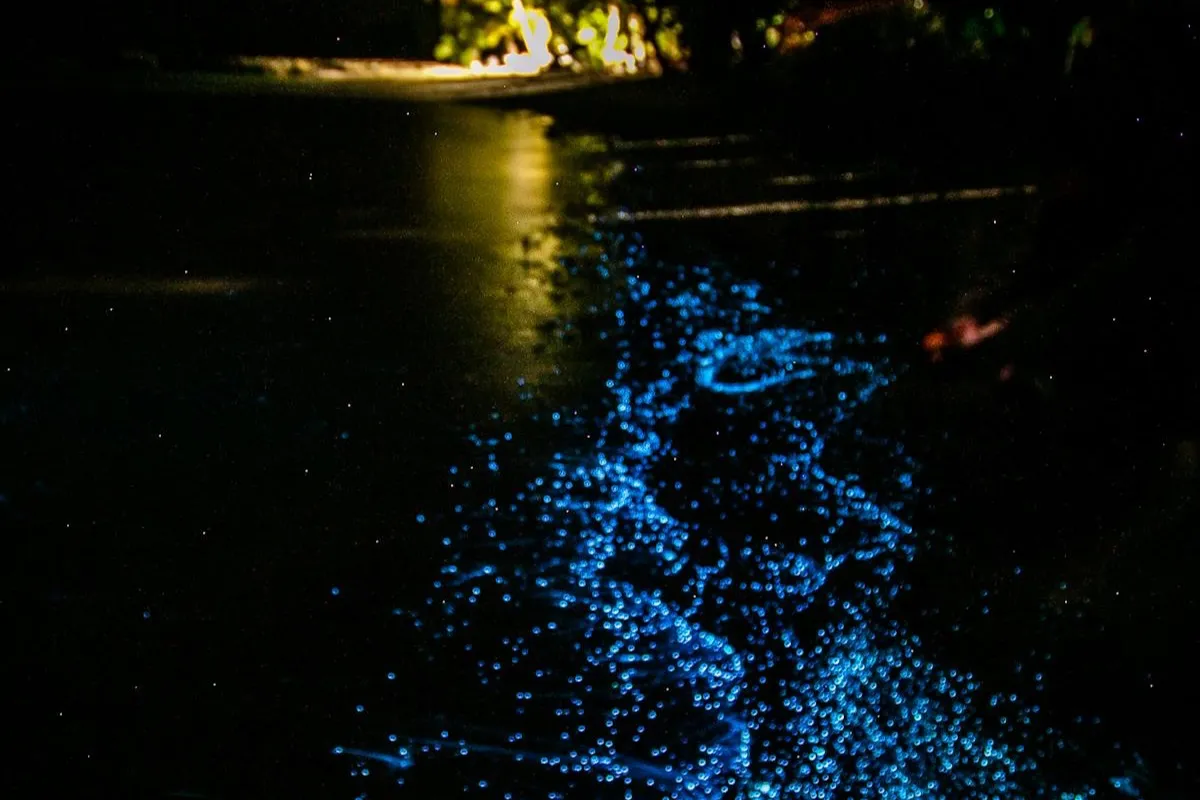
Bioluminescence: The Sea of Stars
The Maldives is one of the best places in the world to witness marine bioluminescence, a natural phenomenon caused by tiny organisms called dinoflagellates. These microscopic plankton emit a blue-green glow when disturbed by movement in the water. As you swim, each stroke of your hand or kick of your fins creates trails of ethereal light, making it feel as though you are moving through a liquid sky filled with stars. Bioluminescence is most commonly observed during the southwest monsoon season from May to November, particularly on moonless nights when the darkness makes the glow more visible. Vaadhoo Island in Raa Atoll has gained worldwide fame for its bioluminescent beaches, but the phenomenon occurs across many islands in the Maldives. Some resorts and guesthouses specifically schedule night snorkeling trips during peak bioluminescence periods to maximise the chances of witnessing this spectacle.
Nocturnal Marine Life
Beyond the bioluminescence, night snorkeling reveals a completely different cast of marine characters compared to daytime excursions. Nurse sharks, which rest under coral ledges during the day, emerge to hunt along the reef. Octopuses, among the most intelligent creatures in the ocean, are far more active at night and can often be seen changing colour and texture as they move across the coral. Moray eels extend from their crevices to hunt small fish, their sinuous bodies weaving through the reef structure. Stingrays patrol sandy areas searching for buried prey, and large parrotfish can be found sleeping in mucus cocoons that they secrete for protection. Reef squid are attracted to underwater torches and may hover near snorkellers, their bodies flashing with iridescent patterns. Lobsters and crabs emerge from hiding to scuttle across the reef, and banded shrimp wave their antennae from coral overhangs. The reef at night is busier than most people expect, and the behaviour of these nocturnal animals is fascinating to observe.
Where to Try Night Snorkeling
Night snorkeling is offered at many resorts and an increasing number of local island guesthouses throughout the Maldives. Resorts with strong house reefs are particularly good options because the reef is close to shore and well-mapped by guides who know the terrain intimately. South Ari Atoll is popular due to the chance of encountering nurse sharks on the reef after dark. North Male Atoll has several accessible sites within reach of Male, making it convenient even for travellers on short stays. Baa Atoll, a UNESCO Biosphere Reserve, offers rich marine biodiversity that makes night excursions especially rewarding. Local island guesthouses on islands like Dhigurah, Thoddoo, and Fulidhoo often include night snorkeling as part of their activity offerings, typically at lower prices than resort equivalents. Some liveaboard dive boats also schedule night snorkeling stops as part of their itineraries.
What to Expect on a Night Snorkeling Trip
A typical guided night snorkeling session begins with a briefing on shore or aboard a boat, where the guide explains safety procedures, hand signals for communication in the dark, and what marine life you might encounter. Groups are usually small, with no more than six to eight snorkellers per guide. Waterproof torches are provided, and participants are instructed to avoid shining lights directly at marine animals, which can startle them. The guide enters the water first and leads the group along the reef, pointing out creatures with a torch. The pace is slow and relaxed, with frequent pauses to observe animals up close. Sessions typically last 45 to 60 minutes, and the water temperature in the Maldives remains warm year-round, so wetsuits are optional though some snorkellers prefer a thin rash guard for comfort. After the session, guides often discuss the species observed and answer questions about the marine life encountered.
Tips for Night Snorkeling
If you have not tried night snorkeling before, consider doing a daytime snorkel at the same site first to familiarise yourself with the reef layout and build confidence in the water. Ensure your mask fits properly and does not leak, as adjusting equipment in the dark is more difficult. Stay close to your guide and the group at all times. Apply reef-safe sunscreen well before the session, or better yet, rely on a rash guard for protection since sunburn is not a concern at night. Avoid touching any marine life, as many nocturnal species like lionfish and stonefish have venomous spines that are harder to spot in low light. Bring a dry bag for personal belongings, and let the resort or guesthouse know about any medical conditions or swimming ability concerns. Most importantly, relax and enjoy the experience. Night snorkeling in the Maldives is one of those rare activities that genuinely surprises even well-travelled visitors.