 Maldives Compass
How to Get to the Maldives
Airport facilities and seaplane terminal.
A spectacular way to travel and an memorable part of the Maldives experience
Two airlines operate seaplane services in the Maldives, connecting Velana International Airport to dozens of resort islands scattered across the atolls.
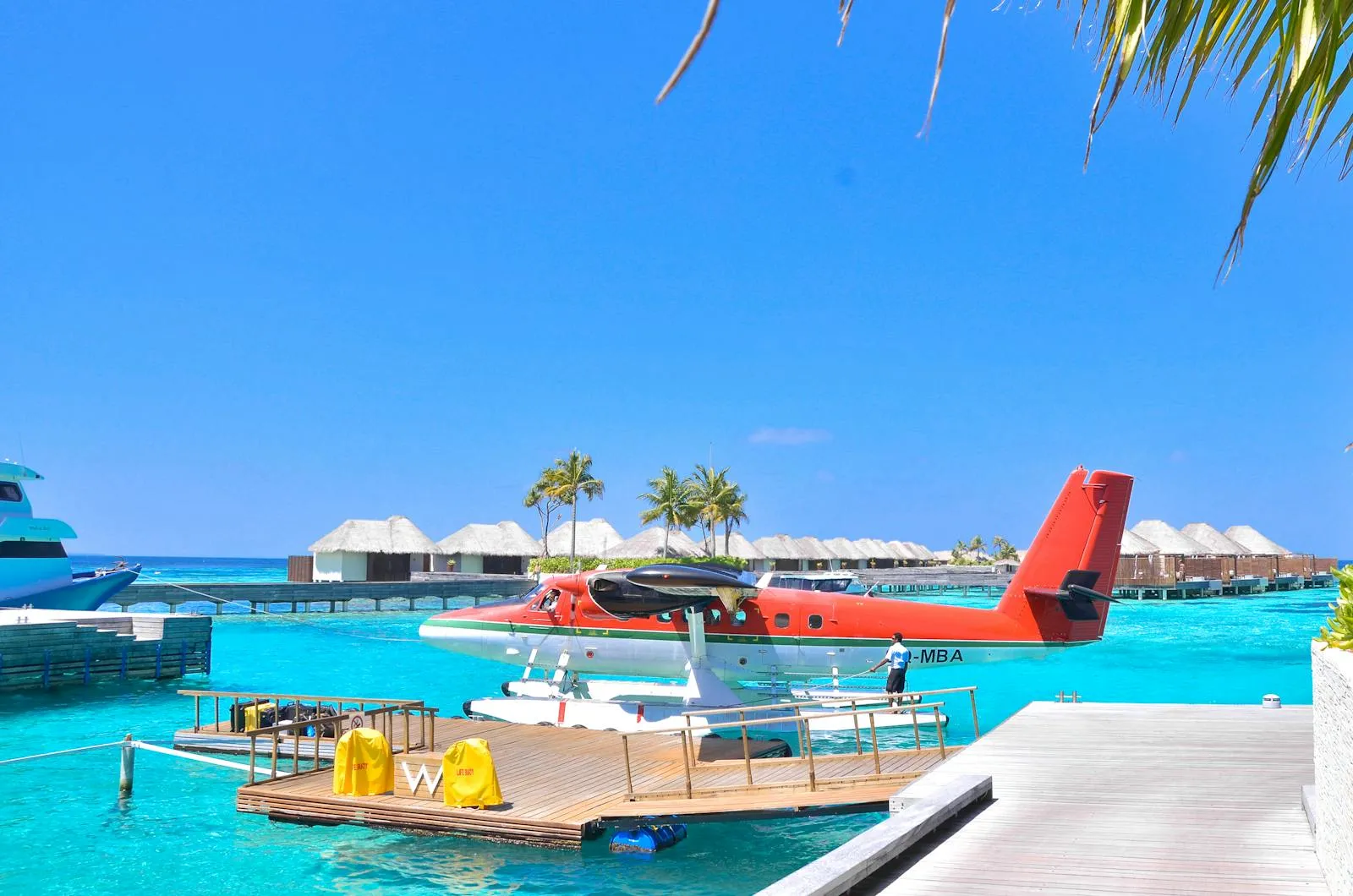
Trans Maldivian Airways (TMA) is the world's largest seaplane operator, with a large fleet of de Havilland Twin Otters. TMA handles the vast majority of resort seaplane transfers and operates from a dedicated terminal at the airport. Their distinctive red-and-white floatplanes are one of the most iconic images of the Maldives.
Manta Air is a smaller operator that offers both seaplane and domestic flight services. They operate a smaller fleet and serve select resorts, particularly in Baa Atoll. Manta Air also runs scheduled domestic flights to regional airports.
Your resort will arrange your seaplane transfer as part of your booking. You do not need to book separately with the airline, though the cost is usually added to your resort bill or paid in advance.
The seaplane transfer process is well-organised but requires some patience. Here is what to expect on arrival day:
On departure day, the process works in reverse. Your resort will arrange pick-up timing to ensure you reach the airport with enough time for your international flight.
Seaplane transfers are a significant expense and should be factored into your overall Maldives budget.
If you are travelling with a lot of luggage or travelling with family, check luggage allowances with your resort before departure. Extra luggage can sometimes be sent on a later flight for an additional fee.
Seaplanes in the Maldives operate only during daylight hours, approximately 6:00 AM to 4:00 PM (last landing by sunset). This is a critical detail that affects your travel planning:
When booking your international flights, aim to arrive before midday if possible. This gives you the best chance of reaching your resort the same day.
For many visitors, the seaplane ride is one of the highlights of their Maldives trip. The Twin Otter is an unpressurised aircraft that flies at relatively low altitude, typically 1,500 to 2,500 feet, giving you aerial views of the atolls, reefs, and lagoons below.
The planes are not luxurious. They are workhorses with basic seating, no air conditioning on the ground (though it is cool once airborne), and significant engine noise. Earplugs or noise-cancelling headphones are recommended.
Despite the utilitarian nature of the aircraft, the views are spectacular. You will see the shades of blue and turquoise that define the Maldives from a perspective that few other experiences can match. The atoll formations, sandbanks, and reef patterns visible from above are simply striking.
The seaplane flight offers exceptional photographic opportunities. Here are some practical tips to capture the best shots:
Keep your camera easily accessible throughout the flight. The views change constantly, and you will want to be ready when a particularly impressive atoll or reef formation comes into view.