 Maldives Compass
The Malé Fish Market
No visit to Malé is complete without a stop at the fish market, located on the northern waterfront near the main jetty. This is where the city comes most alive, especially in the late afternoon when fishing boats return with the day's haul. Yellowfin tuna is the star of the show, with enormous fish being carried in on shoulders, gutted on the spot, and sold to eager buyers. The energy is infectious, and even if you are not buying, watching the rapid transactions and the skill of the fishmongers is a highlight. Next to the fish market, the local produce market sells bananas, papayas, breadfruit, coconuts, and other tropical goods. Walk through both to get a real feel for everyday Maldivian commerce.
The Old Friday Mosque (Hukuru Miskiy)
Built in 1656, the Old Friday Mosque is the oldest mosque in the Maldives and one of the finest examples of coral stone architecture in the world. Its walls are constructed from interlocking coral blocks, and the interior features intricate lacquer work and carved wooden panels. The mosque sits in a compound with a cemetery containing elaborately carved tombstones of former sultans and important figures. Non-Muslims cannot enter the prayer hall, but you can admire the exterior and the cemetery. The craftsmanship on display here is and gives a sense of the artistic traditions that have been part of Maldivian culture for centuries.
The Islamic Centre and Grand Friday Mosque
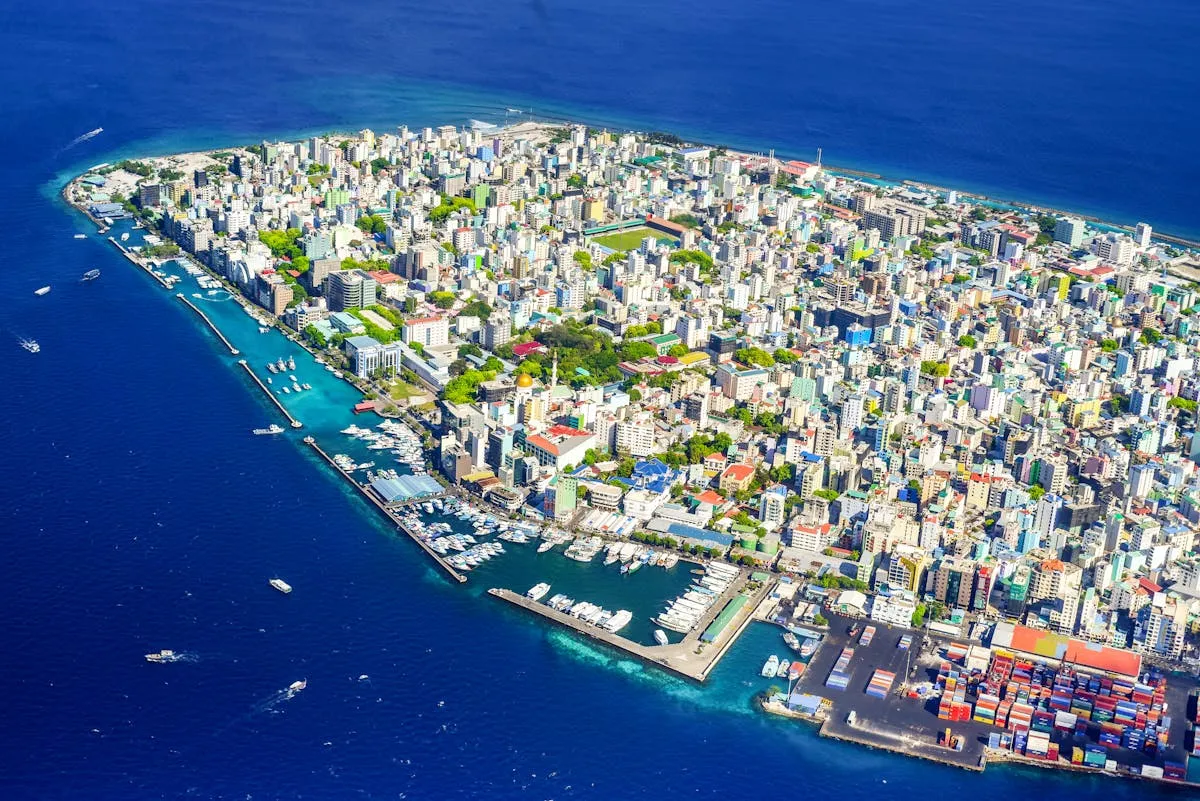
The golden dome of the Islamic Centre is the most recognisable feature of Malé's skyline. Completed in 1984, this modern mosque can hold up to 5,000 worshippers and serves as the main Friday mosque for the capital. The dome gleams in the sunlight and is visible from the sea as you approach the island. The surrounding area includes a library and a conference hall. While non-Muslims generally cannot enter during prayer times, visitors are sometimes allowed inside at other times if dressed appropriately. Even from the outside, the building is an impressive sight and a key photo opportunity.
Sultan Park and the National Museum
Sultan Park is the only significant green space in Malé and offers a welcome break from the density of the surrounding streets. The park occupies the grounds of the former royal palace, and its shaded pathways and benches make it a peaceful spot to sit and rest. Adjacent to the park, the National Museum houses a collection of artefacts spanning Maldivian history, including coral stone carvings from the pre-Islamic Buddhist period, royal thrones, weapons, and traditional clothing. The museum is small but fascinating and can be explored in about an hour. It provides essential context for understanding the country's rich and layered history.
Shopping and Street Exploration
Majeedhee Magu is the main commercial street in Malé and is lined with shops selling everything from electronics to clothing to souvenirs. The smaller side streets are equally interesting, with local tailors, hardware shops, and tiny cafes tucked into every available space. For souvenirs, look for lacquered wooden boxes, miniature dhoni boats, and locally made coconut oil products. The waterfront promenade along the north side of the island is a pleasant place for a walk, especially in the early evening when locals come out to enjoy the breeze and the views across the water to Hulhumalé and the airport island.
Artificial Beach and the Waterfront
On the eastern end of the island, the Artificial Beach is a small man-made beach area that serves as a gathering point for locals, especially in the evenings and on weekends. It is not a swimming beach in the traditional sense, but it has a stretch of sand, some seating, and food stalls nearby. The atmosphere here is lively and social, and it gives visitors a chance to see how Malé residents relax and socialise. Watching the sunset from this area with a short eat from a nearby cafe is a fine way to end a day of exploring the capital.