 Maldives Compass
The Old Friday Mosque (Hukuru Miskiy)
The Old Friday Mosque is the most historically significant building in the Maldives. Constructed in 1656 during the reign of Sultan Ibrahim Iskandhar, it is built entirely from coral stone, a material that was once the primary building resource in the archipelago. The coral blocks are precisely cut and fitted together without mortar, creating walls of impressive beauty and durability. Inside, the mosque features exquisite lacquer work on the ceiling beams and intricately carved wooden panels with Arabic calligraphy. The surrounding cemetery contains tombstones carved with elaborate designs, with rounded tops marking the graves of women and pointed tops for men. Former sultans and notable historical figures are buried here, making it a place of both religious and historical significance. The mosque is a UNESCO-tentative listed site and represents the finest surviving example of traditional Maldivian architecture.
The Islamic Centre and Grand Friday Mosque
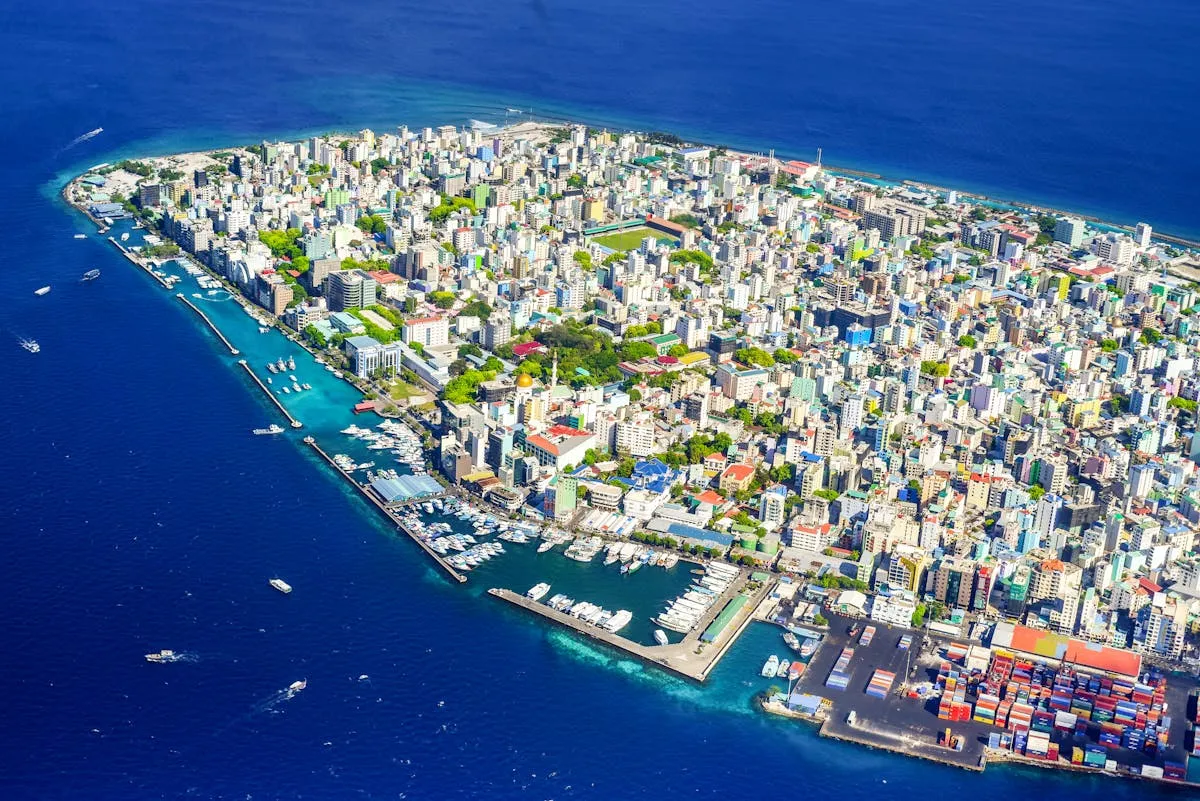
Dominating the Malé skyline, the Islamic Centre was opened in 1984 and features a striking golden dome that can be seen from far out at sea. The building was funded primarily by Gulf states and represents a dramatic shift in architectural style from the traditional coral stone construction of earlier mosques. The Grand Friday Mosque within the centre can accommodate up to 5,000 worshippers and is the largest mosque in the Maldives. The interior is spacious and ornate, with chandeliers, carpeted floors, and walls decorated with Arabic calligraphy. The centre also houses a library with a collection of Islamic texts. Visitors who dress appropriately may be permitted to look inside outside of prayer times, though it is best to ask permission first. The contrast between this modern structure and the centuries-old Hukuru Miskiy just a short walk away tells the story of the Maldives' evolution.
Sultan Park and the National Museum
Sultan Park is the only large green space in Malé and occupies part of the former grounds of the Maldivian royal palace. The palace itself was demolished in 1968 when the sultanate was abolished and the Maldives became a republic, but the gardens were preserved as a public park. Today, it is a peaceful retreat from the busy streets, with large trees, flowering plants, and pathways where families come to relax. The National Museum sits at the edge of the park and contains a collection that spans the full breadth of Maldivian history. Exhibits include coral stone carvings from the Buddhist period that preceded Islam, royal regalia including thrones and ceremonial umbrellas, traditional weaponry, and artefacts from the colonial period. The museum is small enough to explore in an hour but dense with fascinating objects that illuminate a history most visitors know little about.
The Malé Waterfront and Harbour Area
While not a single landmark, the Malé waterfront along the northern coast is one of the most characterful areas of the city. The main jetty area where ferries arrive and depart is always busy with travellers, workers, and goods being loaded and unloaded. The fish market and produce market are located here, and the waterfront road, Boduthakurufaanu Magu, is the widest and most open street on the island, offering views across the water to Hulhulé and the airport. Walking the waterfront from east to west takes about twenty minutes and passes several of the city's key landmarks including the Republic Monument, which marks the spot where the republic was proclaimed. In the evenings, the waterfront becomes a popular place for locals to stroll, sit, and enjoy the ocean breeze.
The Tsunami Monument and Theemuge
The 2004 Indian Ocean tsunami had a devastating impact on the Maldives, and a monument near the waterfront commemorates those who lost their lives. It serves as a sombre reminder of the vulnerability of these low-lying islands to natural disasters. Nearby, the former presidential residence known as Theemuge, though not open to the public, is an architecturally notable building that has served various governmental purposes over the years. These sites, along with the various smaller mosques, schools, and government buildings scattered throughout the city, round out a collection of landmarks that make Malé a more culturally rewarding visit than many travellers expect.