 Maldives Compass
Meet the Reef Sharks
The Maldives is one of the best places in the world to see reef sharks in their natural habitat. These sleek, elegant predators are a common sight on healthy reefs throughout the archipelago, and encountering them while snorkelling or diving is one of the defining experiences of a trip to the Maldives. Far from the fearsome reputation that popular culture assigns to sharks, reef sharks are generally cautious around humans and pose virtually no threat to swimmers.
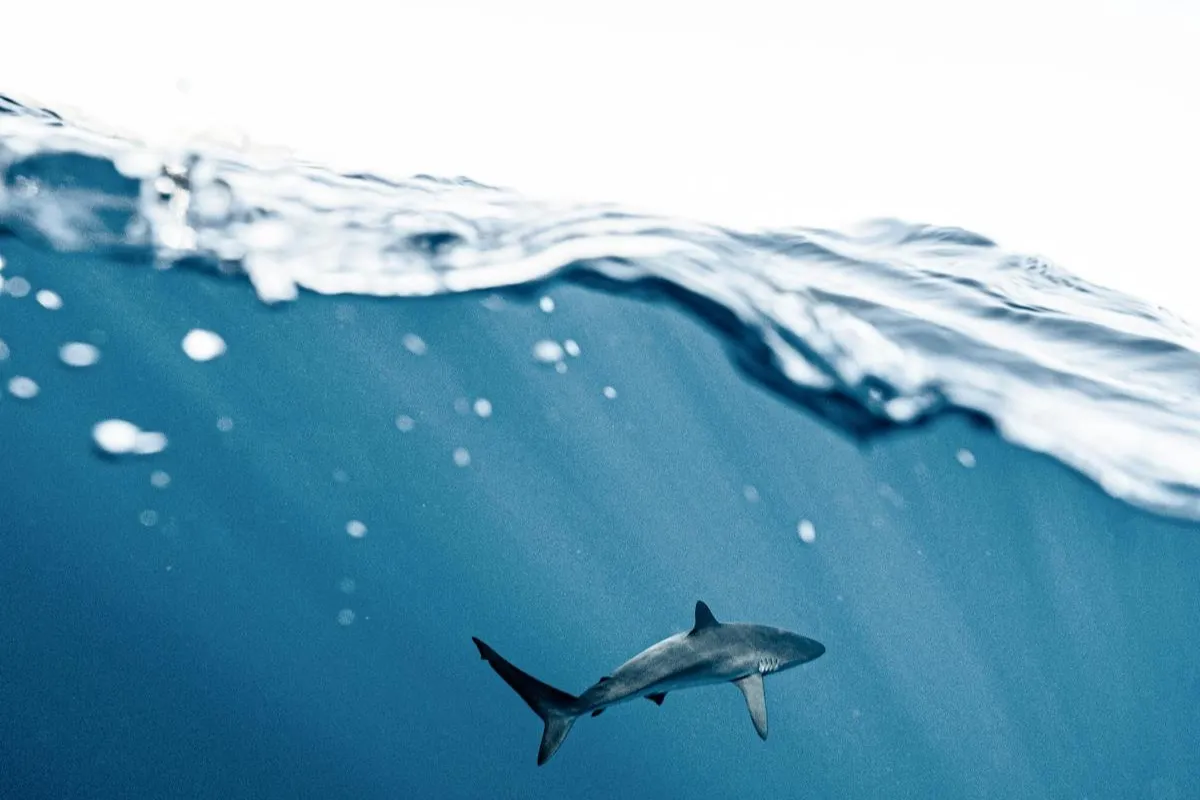
The Maldives hosts several species of reef-associated sharks, but two dominate the shallow reef environment: the blacktip reef shark and the whitetip reef shark. Both are relatively small, reaching about 1.5 to 1.8 metres in length, and both are immediately recognisable by the distinctive markings on their fins that give them their names. For a broader overview of all shark species in the archipelago, see our Sharks in the Maldives guide.
Blacktip Reef Sharks
The blacktip reef shark (Carcharhinus melanopterus) is perhaps the most frequently seen shark species in the Maldives. It is easily identified by the prominent black tips on its dorsal and pectoral fins, set against a tawny brown or grey body with a white underside. Adults typically reach 1.2 to 1.5 metres in length.
Blacktips are the typical shallow-water sharks. They patrol reef flats, lagoons, and sandy shallows, often in water so shallow that their dorsal fin breaks the surface - creating the classic "shark fin" silhouette that makes first-time visitors gasp. They are especially active at dawn and dusk, when they hunt small reef fish, mullet, and squid in the shallows.
These sharks are not aggressive toward humans. If you encounter a blacktip while wading or snorkelling in a lagoon, it will almost certainly swim away. They are curious but skittish, and the typical interaction involves the shark making a single pass to assess you before disappearing. On some resort islands with healthy house reefs, blacktips become semi-habituated to human presence and can be observed reliably from the water villa decks or jetties, particularly at feeding time when kitchen scraps attract small fish.
Whitetip Reef Sharks
The whitetip reef shark (Triaenodon obesus) is the other common reef shark in the Maldives. It is slightly more slender than the blacktip, with a distinctive flat head, oval eyes, and bright white tips on its dorsal and tail fins. Adults typically reach 1 to 1.6 metres in length.
Unlike blacktips, whitetips are primarily nocturnal hunters. During the day, they rest on the sandy bottom beneath overhangs, in caves, or on ledges along the reef slope. It is common to find several whitetips stacked together in a single cave, lying motionless on the sand - unlike many shark species, whitetips do not need to swim continuously to breathe, as they can pump water over their gills while stationary.
At night, whitetips become active and assertive hunters. They probe crevices and holes in the reef, using their slender bodies to reach into spaces that other predators cannot access. They often hunt cooperatively, with several sharks converging on the same coral head and flushing prey from multiple angles. Night divers in the Maldives frequently witness this behaviour, with whitetips weaving between their fins in pursuit of fleeing fish.
Where to See Reef Sharks
Reef sharks are found throughout the Maldives, from the northernmost atolls to the south. Some of the best locations for reliable sightings include the channel entrances (kandu) of Ari Atoll, the thilas of North and South Male Atoll, and the protected reefs of Baa Atoll UNESCO Biosphere Reserve.
For snorkellers, the easiest way to see blacktips is to explore the shallow lagoon edges and reef flats of resort or local islands, especially in the early morning. Many house reefs have resident populations that patrol predictable routes. Whitetips are best spotted while diving, particularly at sites with overhangs and swim-throughs where they rest during the day.
Channel dives are particularly spectacular for shark sightings. As tidal currents flow through the narrow channels between islands, they carry nutrients that attract schools of fish, which in turn attract sharks. Drift dives through these channels can produce encounters with dozens of grey reef sharks, blacktips, and whitetips simultaneously, along with nurse sharks resting on the channel floor.
Safety Around Reef Sharks
Reef sharks are not dangerous to humans under normal circumstances. There are no recorded fatal attacks by blacktip or whitetip reef sharks anywhere in the world. The few minor incidents that have occurred have almost always involved spearfishing (where the shark was attracted to a struggling, bleeding fish) or deliberate feeding and harassment.
Basic common sense ensures safe interactions. Do not attempt to touch, grab, or ride sharks. Do not corner them in enclosed spaces. If you are snorkelling and a shark approaches, remain calm and still - it is investigating you and will almost certainly move on. Avoid splashing erratically on the surface, which can mimic the movements of injured prey. Do not enter the water with open wounds, and avoid wearing shiny jewellery that could be mistaken for fish scales in murky water.
The Maldives banned shark fishing in 2010, and the entire exclusive economic zone is designated as a shark sanctuary. This protection has allowed shark populations to remain relatively healthy compared to many other parts of the world, and it means that the sharks you encounter are accustomed to seeing humans without associating them with threat or food.
Role in the Ecosystem
Reef sharks are apex or mesopredators - they sit near the top of the reef food chain and play a critical role in regulating the populations of species below them. By preying on sick, weak, and slow fish, they keep prey populations healthy and genetically fit. By controlling populations of mid-level predators like groupers and jacks, they prevent those species from over-consuming herbivorous fish, which in turn ensures that algae-grazing fish remain abundant enough to prevent algae from overgrowing coral.
This cascading effect means that removing sharks from a reef can trigger a chain reaction that ultimately degrades coral health. Studies across the Pacific and Indian Oceans have shown that reefs with healthy shark populations tend to have more coral cover, greater fish diversity, and higher overall resilience to disturbances like bleaching.
The Maldives' shark sanctuary status recognises this ecological importance. Shark-based tourism also generates significant revenue - a single reef shark seen repeatedly by thousands of tourists over its lifetime is worth far more to the economy alive than it would be as a single catch on a fishing line. This economic argument has been instrumental in building support for shark protection among local communities.