 Maldives Compass
Traditional Clothing
Learn about the libaas, mundu, and how dress reflects both tradition and Islamic values.
Islam is not just a religion in the Maldives - it is the heartbeat of community life, shaping everything from the daily schedule to social customs and national identity.
The Maldives is a Sunni Muslim nation, and Islam is the state religion. The country converted from Buddhism to Islam in 1153 CE, traditionally attributed to the visit of a North African scholar named Abu al-Barakat Yusuf al-Barbari. Since that conversion nearly nine centuries ago, Islam has been inseparable from Maldivian identity. Every citizen is Muslim by law, and the faith permeates daily life in ways that are both visible and deeply personal.
For visitors, understanding the role of Islam is not about memorising rules - it is about appreciating the values that shape Maldivian hospitality, community life, and social norms. Maldivians are generally warm and welcoming toward visitors of all backgrounds, and a respectful awareness of Islamic customs goes a long way.
The five daily prayers (salat) provide the rhythm of the Maldivian day. The call to prayer (adhan) sounds from mosques across every inhabited island at the appointed times: Fajr (dawn), Dhuhr (midday), Asr (afternoon), Maghrib (sunset), and Isha (night). Each prayer time lasts roughly 15 to 20 minutes, during which many shops and businesses may close briefly.
On local islands, you will notice life slowing around prayer times. This is a natural pause in the day, and visitors should be mindful of it - avoid playing loud music, and understand that services may be momentarily interrupted. On resort islands, prayer times are generally less noticeable to guests, as resorts operate on their own schedules, though Maldivian staff members will observe their prayers.
Ramadan, the holy month of fasting, has a significant impact on daily life in the Maldives. During Ramadan, Muslims fast from dawn to sunset - abstaining from food, drink, and smoking during daylight hours. The pace of life shifts: work hours are often shortened, and the social rhythm of the day revolves around the pre-dawn meal (suhoor) and the evening meal that breaks the fast (iftar).
Visitors on resort islands will find that their experience is largely unaffected, as resorts continue to serve meals and beverages as normal. However, on local islands and in Malé, restaurants may be closed during the day, and it is considered respectful for visitors to avoid eating, drinking, or smoking in public during fasting hours. Ramadan is also a time of heightened community spirit, generosity, and prayer - if you visit during this period, you will witness a particularly meaningful dimension of Maldivian life.
The end of Ramadan is marked by Eid al-Fitr, one of the biggest celebrations of the year, with feasting, new clothes, family visits, and community gatherings. It is a joyful time, and visitors are often welcomed into the festivities.
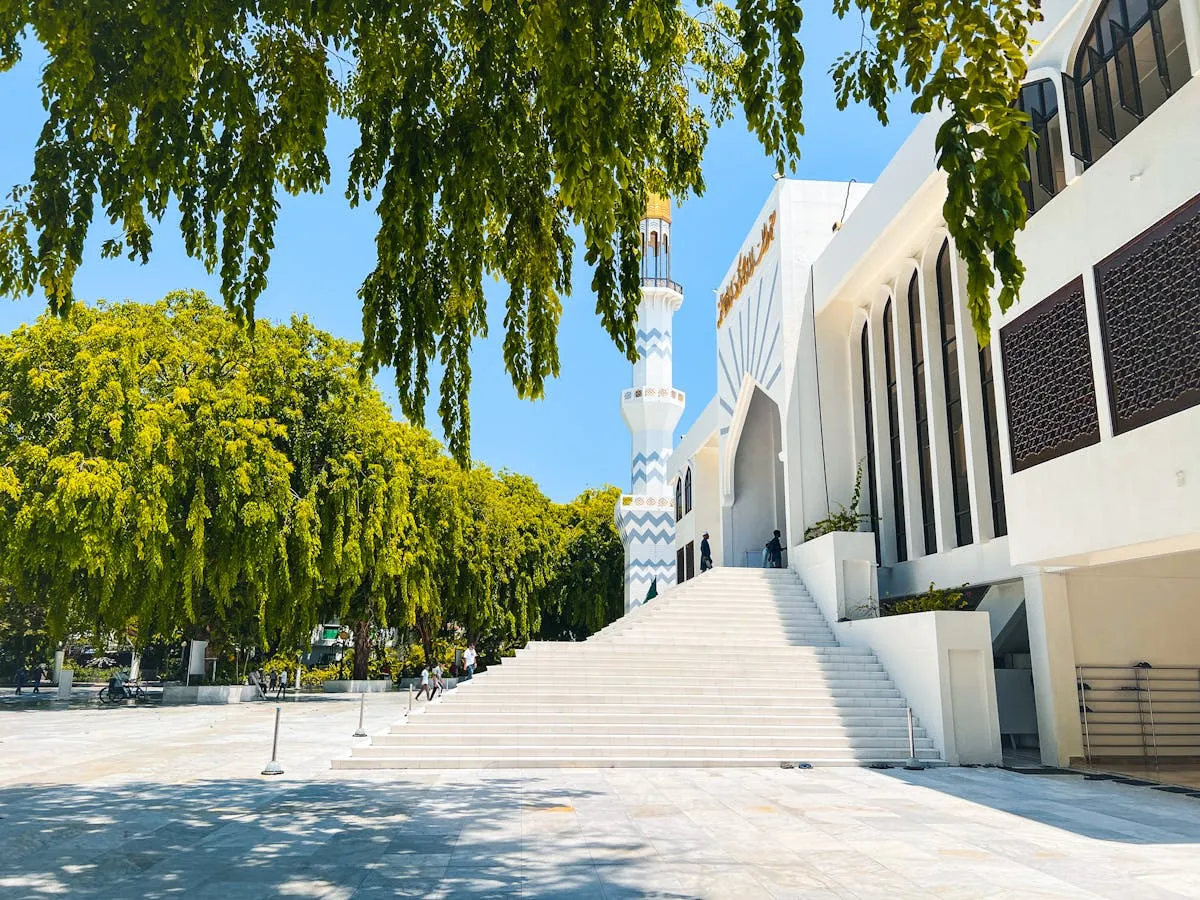
Every inhabited island in the Maldives has at least one mosque, and many have several. Mosques range from simple coral-stone structures to the grand Islamic Centre in Malé, with its striking golden dome that dominates the capital's skyline. The historic Hukuru Miskiy (Friday Mosque) in Malé, built in 1658 from intricately carved coral stone, is a UNESCO-recognised example of Maldivian craftsmanship and one of the finest coral-stone mosques in the world.
Mosques are active places of worship, not tourist attractions, and visitors should approach them with respect. Non-Muslims are generally not permitted to enter mosques in the Maldives, though the exterior architecture is well worth admiring. If you are near a mosque during prayer times, keep noise levels down and avoid standing directly in front of entrances.
Maldivians do not expect foreign visitors to follow every Islamic custom, but they do appreciate respectful behaviour. Here are the key customs to be aware of:
The Maldives is a conservative Muslim society, but it is also a nation with a long history of welcoming foreign visitors, traders, and travellers. Maldivians take pride in their hospitality, and visitors who show genuine respect for local customs will find doors opening and friendships forming. You do not need to be an expert on Islam - simple gestures like greeting people with Assalaamu alaikum, dressing appropriately on local islands, and being mindful during prayer times and Ramadan are more than enough.
For more detailed guidance on etiquette and practical considerations, including dress codes and behavioural tips, see our practical information section.